Project
Project details
Wambo Wind Farm is one of the largest of its kind in Queensland. At 247m tall from base to tip, its turbines will be amongst the tallest in the world producing renewable energy once complete.
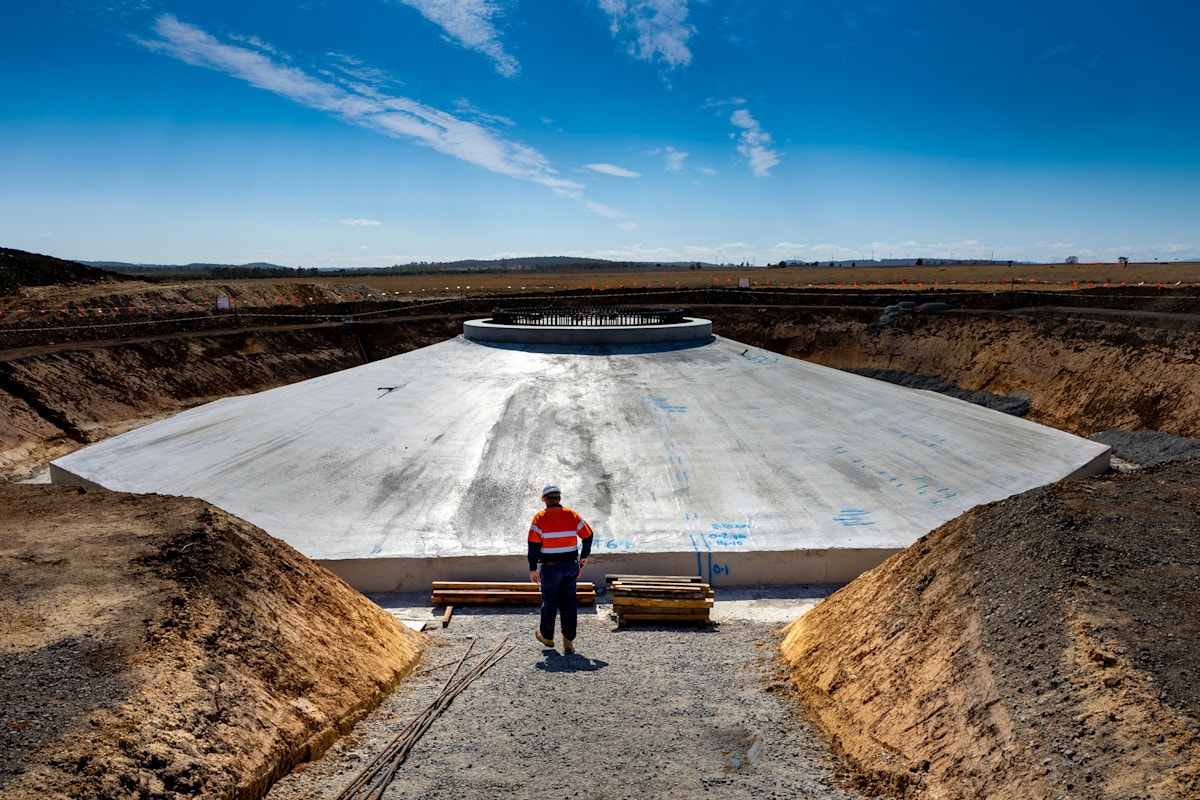
Prior to the commencement of construction in 2023, the Wambo Wind Farm project was rigorously assessed and approved under Queensland Government planning and environment frameworks as well as Federal Government environmental protection laws.
The Original Equipment Manufacturer (OEM) and Engineering, Procurement and Construction (EPC) contractor on the project is Vestas - a global leader in both onshore and offshore wind energy technology, supplying wind turbines to over 39 countries.
Project Stages
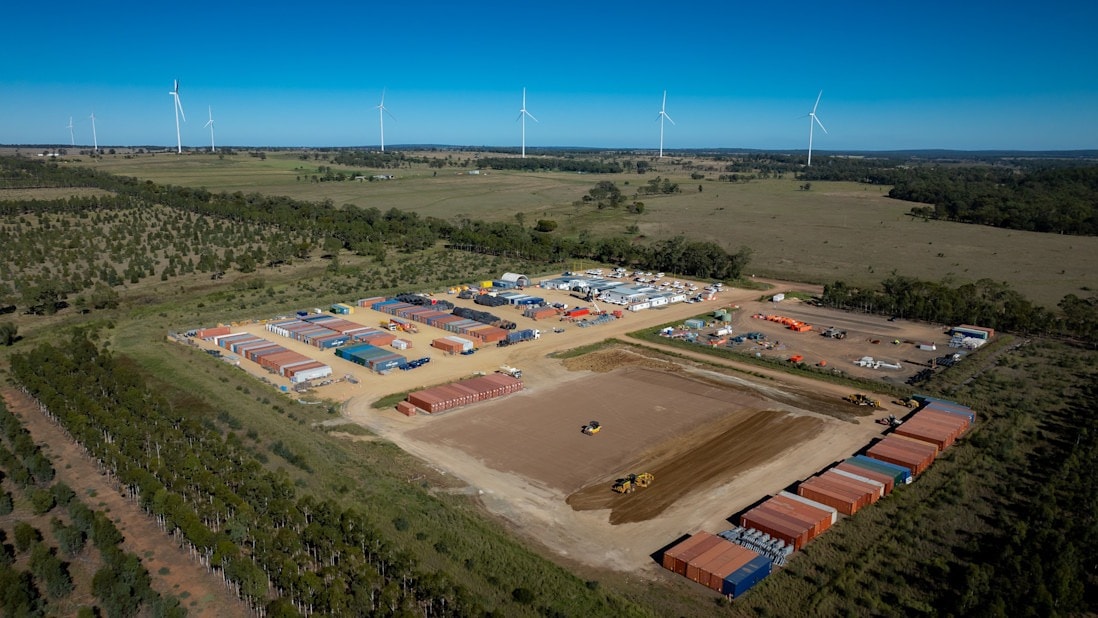
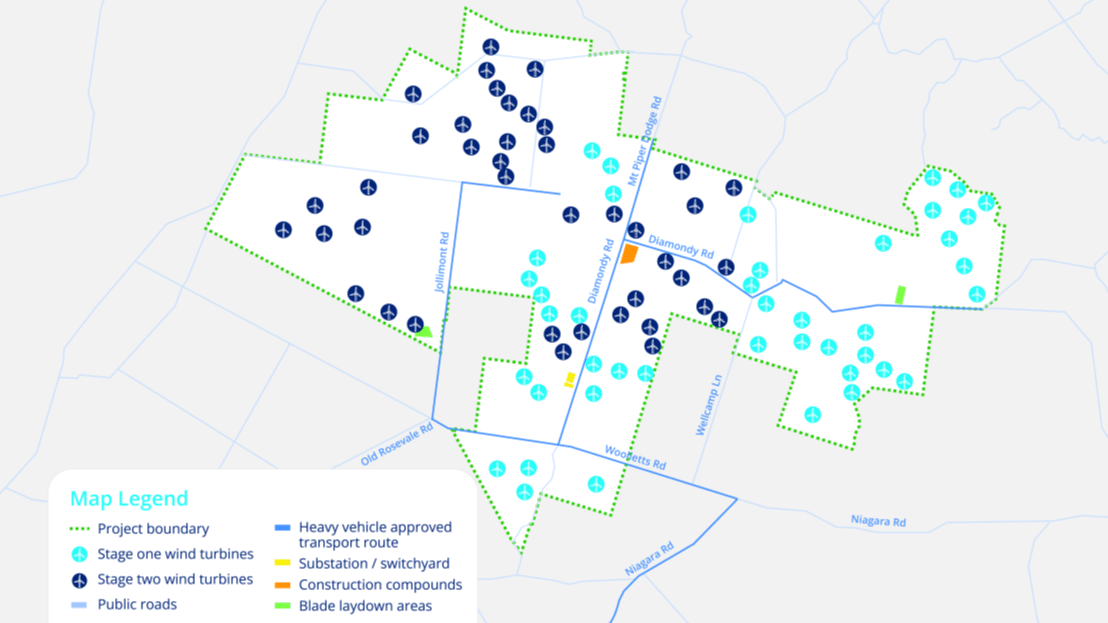
The Wambo Wind Farm is being developed in two stages. Both stages are being developed and constructed in parallel, fast tracking the delivery of full combined operations by 2026.
Stage One
Construction commenced: April 2023
Commerical operations: Quarter 2, 2026
Size: 42 turbines
Turbine capacity: 6.0 MW capacity each
Total capacity: 252 MW
Yield: c.840 GWh
Offtake: 15 year power purchase agreement with Stanwell for 100% output
EPC Contractor: Vestas
Civil balance of plant contractor: Fulton Hogan
Electrical balance of plant contractor: Yurika
Stage Two
Construction commenced: April 2024
Commerical operations: Quarter 4, 2026
Size: 41 turbines
Turbine capacity: 6.2 MW capacity each
Total capacity: 254.2 MW
Yield: c.700 GWh
Offtake: 15 year capacity purchase agreement with Stanwell for 100% output
EPC Contractor: Vestas
Civil balance of plant contractor: Bielby
Electrical balance of plant contractor: Yurika
Project map
Turbine specifications
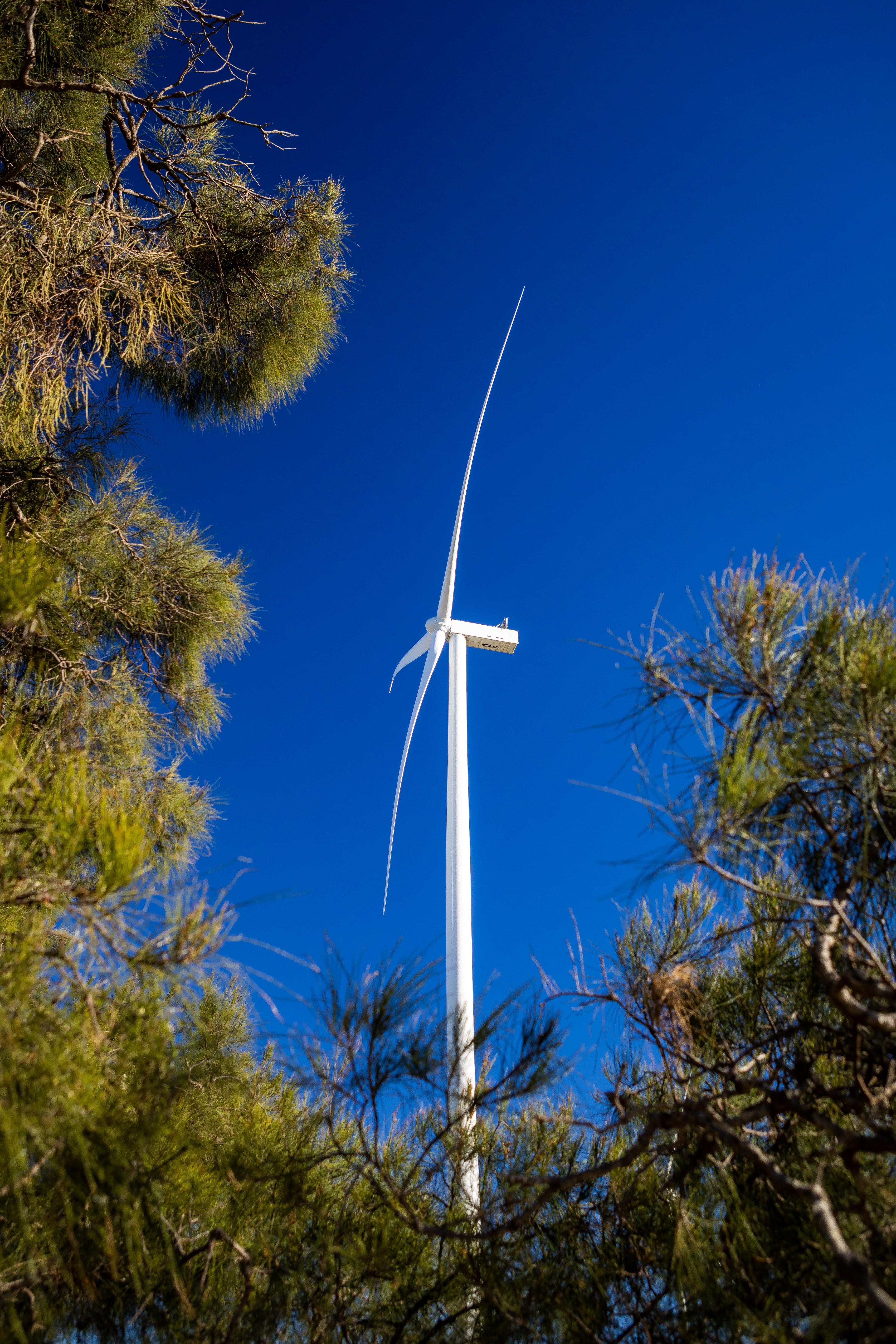
Wambo Wind Farm will be powered by cutting-edge wind technology, using Vestas EnVentus™ V162 turbines—some of the most advanced and efficient onshore wind turbines available today.
These turbines are designed for high performance, low noise, and optimal efficiency in a wide range of wind conditions, helping to deliver clean, reliable energy to Queensland’s electricity grid.
Model: Vestas EnVentus™ V162- 6.0 MW & 6.2MW
Rotor Diameter: 162 metres
Turbine height: 247 metres, from base to tip.
Swept Area: Over 20,000 m² per turbine—maximising energy capture from the wind
Grid connection
To deliver clean energy to Queensland businesses and homes, Wambo Wind Farm is being connected to the national electricity grid through a dedicated high-voltage transmission line.
Powerlink Queensland will deliver the connection infrastructure. This includes the construction of a new 275kV double-circuit transmission line and a new substation at Diamondy, located on the wind farm site. This design offers increased reliability and capacity compared to a single-circuit line, and will provide a connection backbone for future renewable energy assets in the Western Downs regions.
Read about the Powerlink Grid Connection project here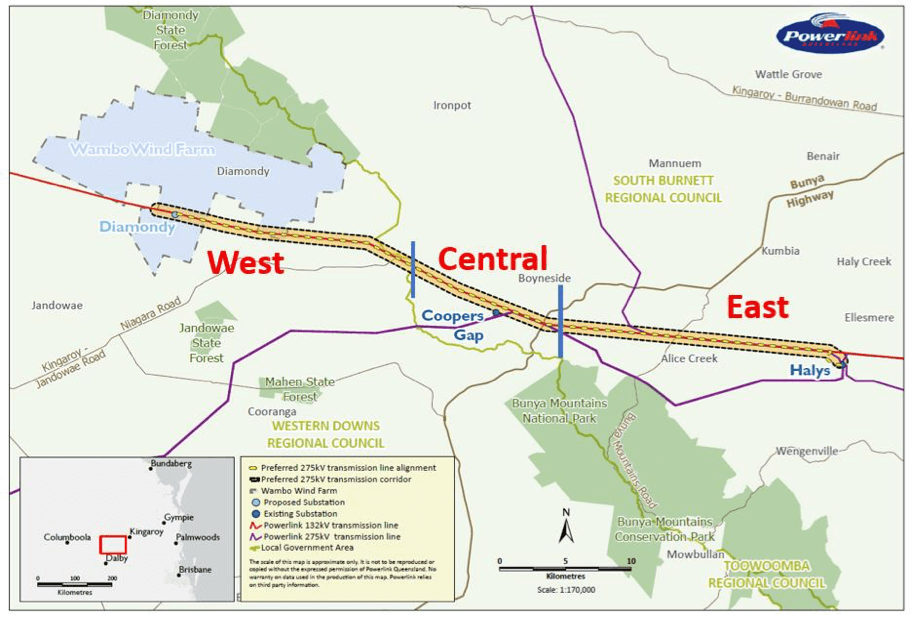
Road and traffic management
As the Wambo Wind Farm is being built, there will be an increase in construction traffic delivering materials, machinery and turbine components to site.
To minimise disruption and ensure safety:
A Traffic Management Plan has been developed with road authorities.
All heavy vehicles must use approved routes outlined in the Roads Infrastructure Agreement with Western Downs Regional Council.
Several local roads and intersections (including Dalby–Jandowae Rd, Hickeys Rd, Niagara Rd, Woolletts Rd, Diamondy Rd and Mount Piper Dodge Rd) have been upgraded to support the safe transport of large, heavy loads.
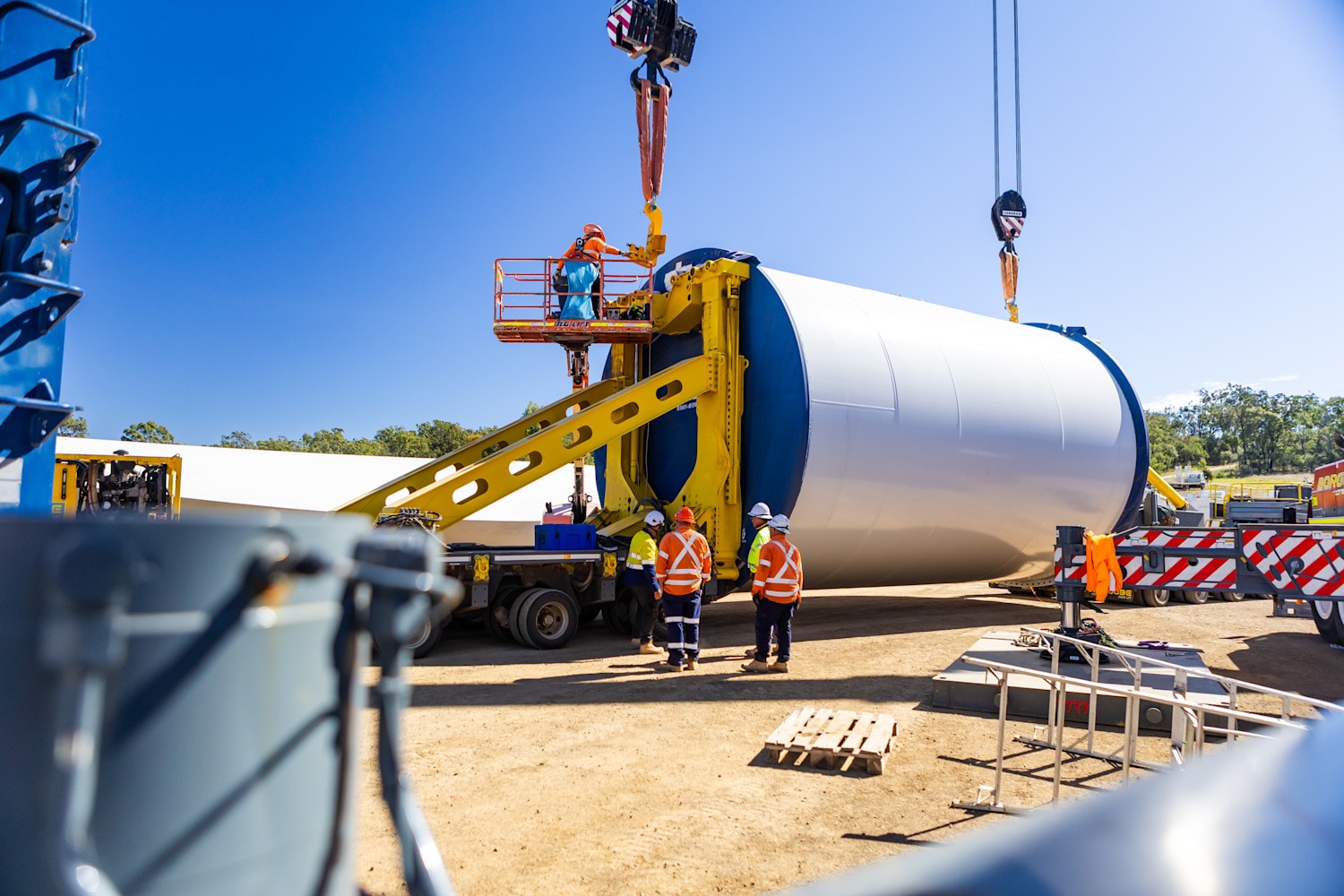
Wind turbine components are transported overnight from the Port of Brisbane to Diamondy via Dalby, with most deliveries leaving the Port of Brisbane after 10 pm and clearing the roads by 7 am, and avoiding Sundays and public holidays where possible.
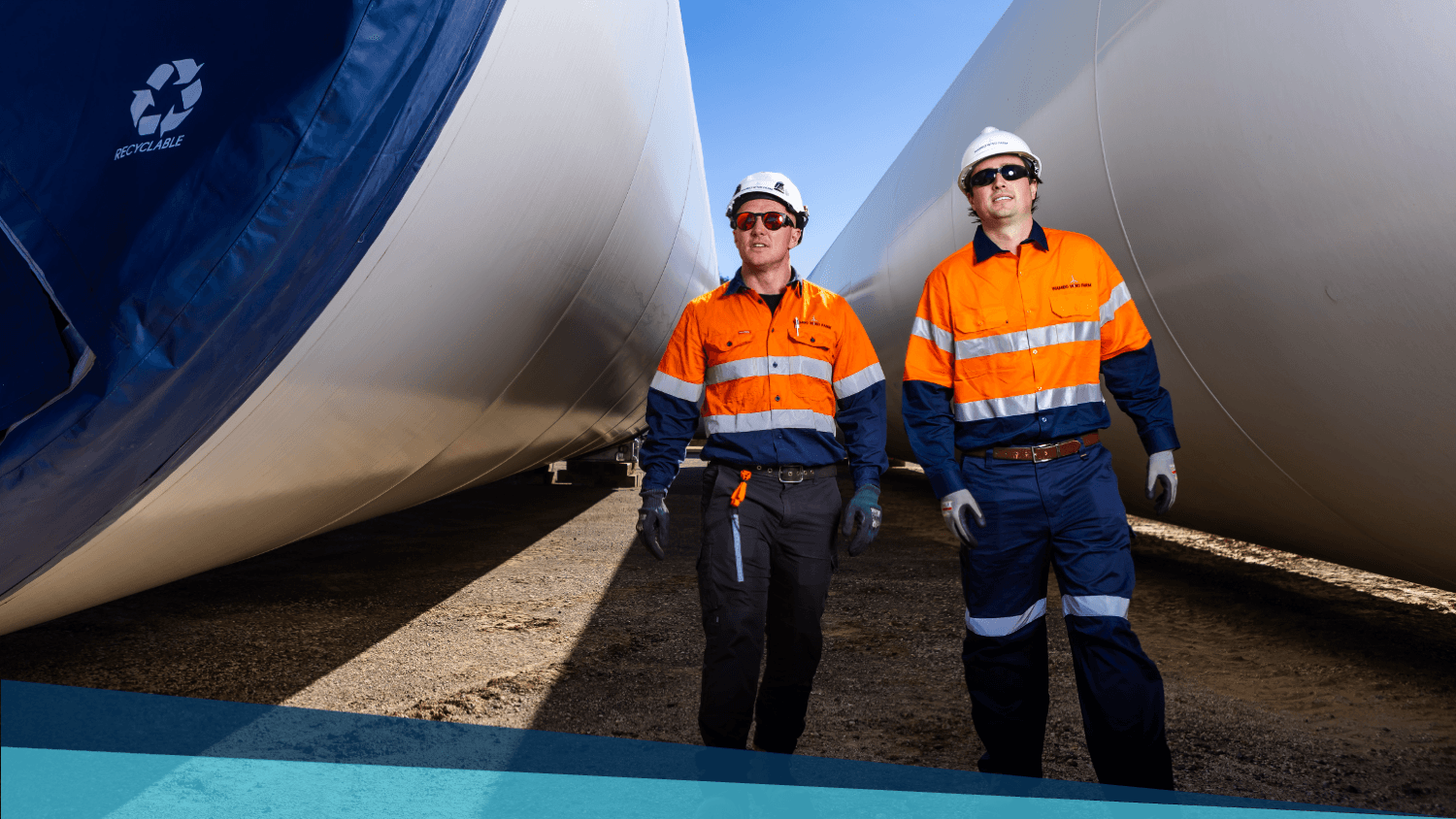
Each turbine requires 13 over-size, over-mass loads, including tower sections, blades and generator components — all escorted by police and pilot vehicles. Delivery times may change due to weather, events or operational needs.
The transportation of wind turbines to the wind farm site is a significant logistical undertaking. The turbines are transported from the Port of Brisbane to Diamondy via Dalby, with these over size, over mass (OSOM) taking place overnight to minimise disruption to other road uses.
Each complete turbine consists of eight tower sections, three blades, nacelle, hub and drive train and requires require thirteen loads in total. Each load is accompanied by police escorts and pilot vehicles.
Deliveries depart from the Port of Brisbane no earlier than 10pm, with all OSOM transport vehicles required to be off road by 7am the next morning. Deliveries typically do not occur on Sundays or public holidays. The delivery schedule is also subject to change to accommodate special events, availability of equipment and personnel, and weather conditions.
Noise management
Every wind farm is required to meet stringent noise requirements established in the planning process to ensure that noise will not negatively impact on local residents. To achieve development approval, a wind farm must demonstrate that noise levels at neighbouring residences will meet strict noise limits established under state planning guidelines.
A number of steps are taken during the development and operation of a wind farm to minimise noise impacts:
Strategic siting: Turbines are placed at certain distances from homes, sensitive areas and other turbines to manage noise impacts
Operational controls: Turbines can be programmed to reduce speed during certain times or conditions.
Technological improvements: Modern blade designs and quieter gearboxes help reduce noise.
Monitoring and maintenance: Regular checks ensure turbines operate within noise limits.
Measures are also in place to minimise the impact of noise during the wind farm's construction: these include site speed limits to minimise engine noise, consistently maintaining equipment and machinery, minimising noise from vehicle reversing beepers and turning off machinery when not in use.
Night: During operations, noise from the wind farm is not permitted to exceed 45 dB for host lots, or 35 dB for non-host (neighbouring) residences.
Day: During operations, noise from the wind farm at non-host (neighbouring) residences must not exceed 37 dB (or the background noise level plus 5 dB whichever is the greater).
For reference - a domestic air conditioner can produce up to 60 dB. A whispered conversation is around 30 dB.
Cultural heritage
Located on the traditional lands of the Western Wakka Wakka and Barunggam Peoples and nestled at the foothills of the sacred Bunya Mountains, the Wambo Wind Farm sits on country rich with cultural meaning and deep ancestral connection.
The Bunya Mountains have been and remain a significant meeting place for Aboriginal Peoples from across southern Queensland and northern New South Wales - a place where stories, songlines, ceremony, and cultural knowledge are shared and passed down. Wambo Wind Farm recognises the importance of working in genuine partnership with Traditional Owners. Through the development and implementation of Cultural Heritage Management Plans (CHMPs) with both the Western Wakka Wakka and Barunggam peoples, the project took careful steps together with representatives from each group to identify, protect and preserve areas and items of cultural significance during the early stages of construction. This knowledge sharing ensured that Traditional Owners were not only consulted but actively involved in decision making about how cultural values should be respected throughout the project.
At Wambo, this approach reflects our deeper commitment to walk alongside Traditional Owners, to listen deeply, to ensure First Nations voices and knowledge systems guide our work and that we continue to honour the past and those who have cared for Country from the beginning.
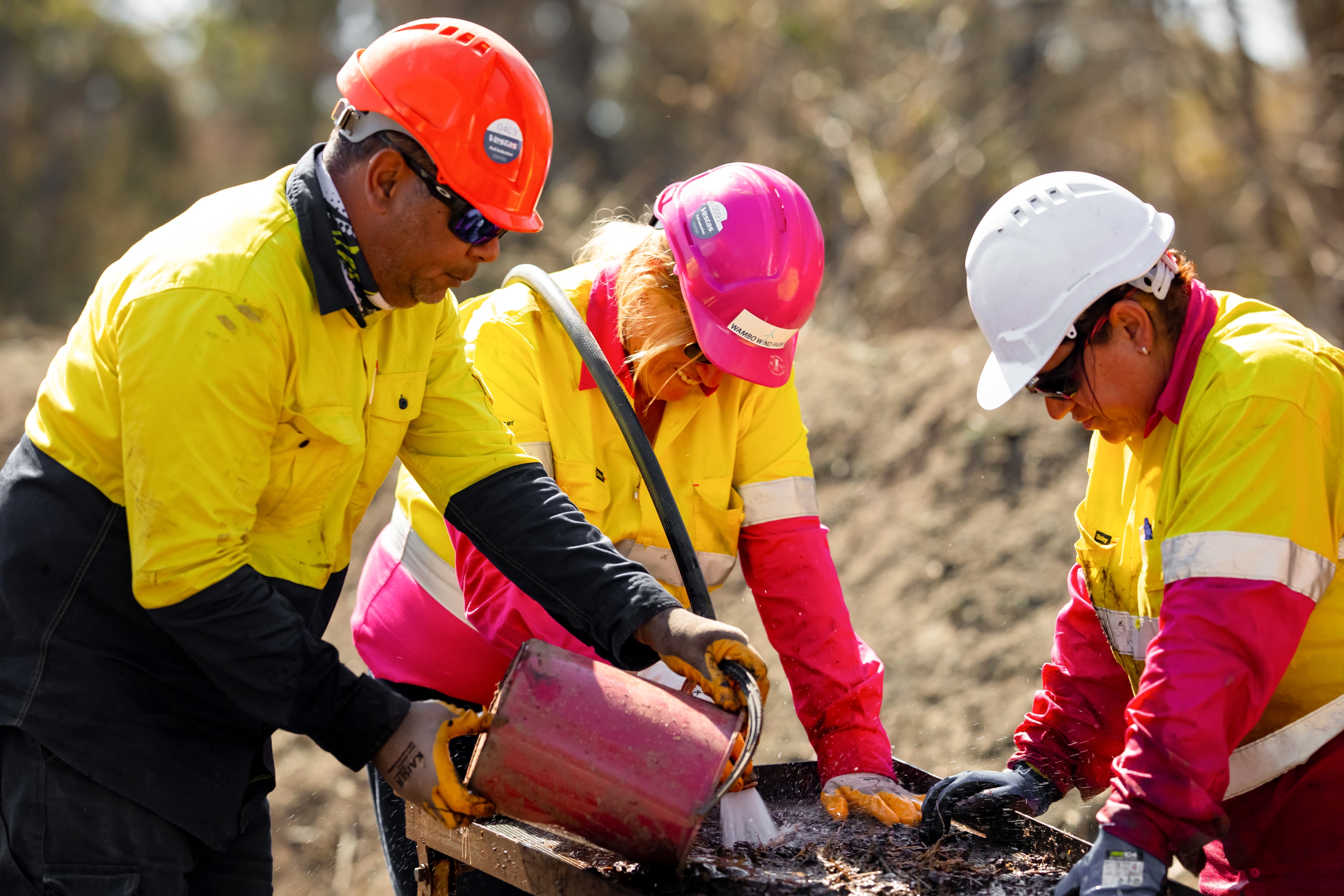
Cultural heritage representatives for the Western Wakka Wakka and Barunggam people conducting wet water sifting in search of Indigenous and Aboriginal artefacts.
Environmental protection
The Wambo Wind Farm has been designed with strong environmental protections in place. All impacts — including the vegetation clearing needed to build stages one and two — were rigorously assessed and approved through Queensland and Australian Government approval processes.
Specialist surveys were undertaken during the project’s planning and development phase to understand local wildlife habitats, migration paths and ecological values. These insights informed turbine placement and allowed us to limit clearing to less than 43 hectares across a 13,000-hectare project area.
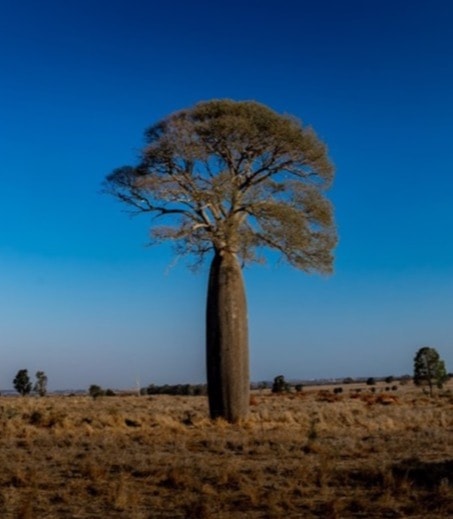
Other mitigation measures include utilising turbine heights that minimise overlap with bird flight paths, strict “no-go zones” and pre-clearance wildlife surveys and the relocation of significant species within the project area (including the region’s iconic Bottle Trees).
Nearly 300 hectares of native vegetation next to Diamondy State Forest will be protected and improved to offset impact on habitat for the koala, greater glider, white-throated needletail and glossy ibis.
The wind farm sits mostly on existing cleared agricultural land and participating landholders will continue to use their land as they see it, except for the small footprints occupied by turbines and associated infrastructure.
Biosecurity protection measures are a priority for the project. To prevent the spread of weeds and diseases during construction, all vehicles must comply with approved biosecurity plans. These include requirements such as vehicle wash-downs, weed identification and ongoing monitoring.